Aluminum hypophosphite exhibits good flame retardant properties in hot melt adhesives, polypropylene, TPE, TPU cables, PVC, and potting compounds, showing greater advantages over red phosphorus in white-based material systems. Adding 25-30% aluminum hypophosphite and 5-15% MPP flame retardant to hot melt adhesives yields good flame retardant results. However, it was found that the composite flame retardant also significantly affects the viscosity of the hot melt adhesive. What are the reasons for this phenomenon, and what are some solutions?
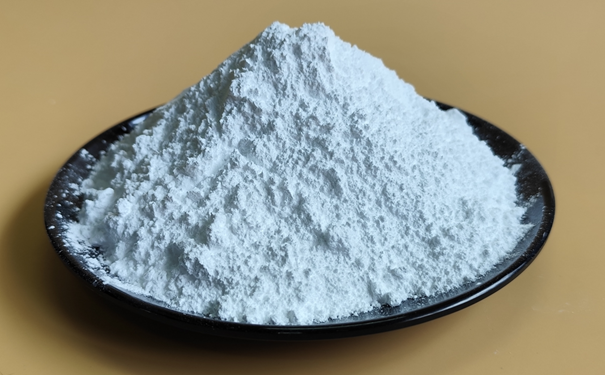
1,Reasons for Increased Viscosity: Aluminum hypophosphite has a relatively fine particle size (D50 < 5μm), resulting in a large specific surface area, numerous interfaces with the hot melt adhesive, and stronger friction. A 25% addition level significantly increases viscosity. Unmodified inorganic powder flame retardants are hydrophilic, leading to poor compatibility with hydrophobic resin hot melt adhesives and a tendency to agglomerate, causing abnormally high viscosity. Powder flame retardants easily form a "spatial interwoven structure" in hot melt adhesives, increasing flow resistance, disrupting the original homogeneous continuous structure of the liquid, increasing internal friction and flow resistance, thereby increasing viscosity. The fine particles of the powder attract each other through van der Waals forces, forming a three-dimensional, flocculated network structure, which is the main reason for the significant increase in viscosity.
2, the solution: To make the hot melt adhesive flow and overcome the yield stress, this fragile network structure must first be disrupted. Once the structure is disrupted, the viscosity will decrease. From this principle, aluminum hypophosphite treated with silane coupling agents or other surface treatment agents can prevent powder agglomeration, ensuring its uniform dispersion in the matrix. Simultaneously, surface treatment improves its flowability and dispersibility, reduces friction, increases compatibility with the hot melt adhesive, reduces the interweaving density of powder and adhesive, and also inhibits van der Waals forces to some extent. Therefore, modified aluminum hypophosphite can effectively reduce the viscosity of hot melt adhesives.
Aluminum hypophosphite binds to the resin through the organic functional groups of the silane coupling agent, while the inorganic functional groups react with the surface of the aluminum hypophosphite flame retardant, enhancing the interfacial bonding force. The flame retardant is dried at 80℃ for 2 hours to remove adsorbed moisture from its surface; otherwise, it will affect the coupling reaction in the coating process. Select silane coupling agent KH-550 or titanate coupling agent, and dissolve them in 95% ethanol at a ratio of 0.5-2% of the total system mass. After stirring evenly, let stand for a while to allow the silane coupling agent to fully hydrolyze. Add aluminum hypophosphite powder to the treatment solution and stir at 40-60℃ for 1-2 hours to allow the hydrolyzed silane coupling agent to be uniformly adsorbed on the surface of aluminum hypophosphite and undergo a bonding reaction. Filter out the powder and dry it at 100-120℃ for 3-5 hours to remove residual solvent, completing the coating. The coated and modified aluminum hypophosphite exhibits significantly improved dispersibility in EVA, hot melt adhesives, polyurethane adhesives, potting compounds, acrylic resins, and other resins.
Tel:+86-512-36622455
Fax:+86-512-36874501
Phone:+86-13358057724
Email:hxo@hxochem.com
Add:No. 1377, Fuchunjiang Road, Kunshan Development Zone, Suzhou, Jiangsu, China
 简体中文
简体中文
 English