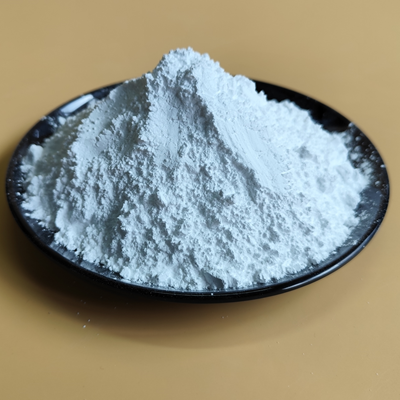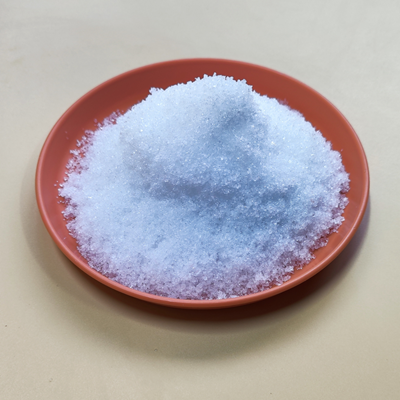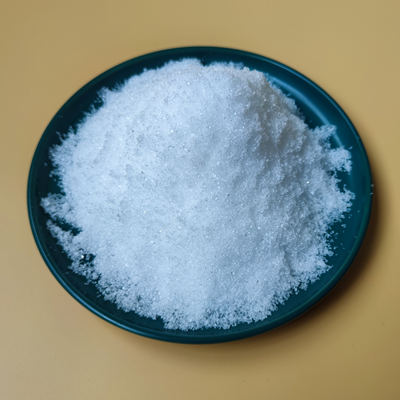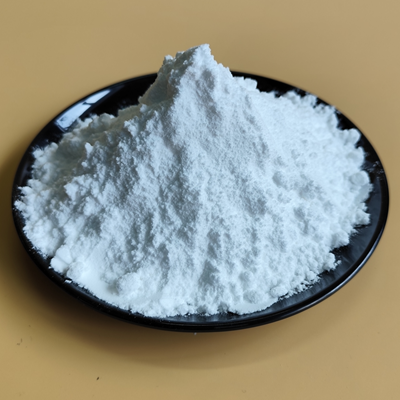
Calcium hypophosphite is soluble in water but easily clumps after absorbing moisture. Its solubility at room temperature is 16.7 g/100 ml water, so it should be stored in a dry warehouse. Its chemical formula is Ca(H₂PO₂)₂, with a phosphorus content of 35.74% and a calcium content of 23%. The decomposition temperature of 1% calcium hypophosphite is 350℃. It can be used as a halogen-free flame retardant for PA6/66 and is generally used in combination with other flame retardants. It is also a good animal feed additive with excellent antioxidant properties.
I. Basic Properties
English Name: Calcium hypophosphite; Calcium phosphinate
Chemical Formula: Ca(H2PO2)2
CAS NO.: 7789-79-9
EINECS: 232-190-8
UN: 3180 4.1/PG 2
Molecular Weight: 170.06
HS NO.: 2835100000
Export Tax Rebate Rate: 0
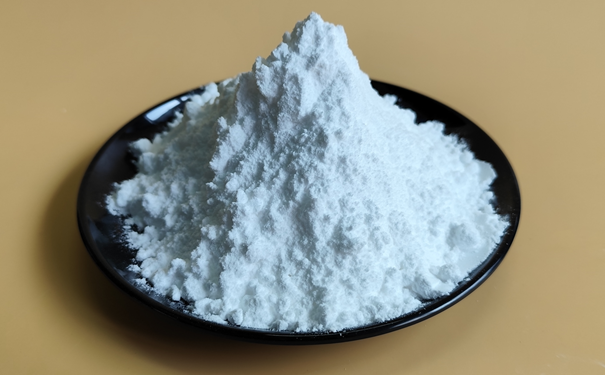
Appearance: White crystalline powder, soluble in water, insoluble in alcohol.
II. Product Specifications
Ca(H2PO2)2≥98.0
pH value: 5.0-7.0
Whiteness ≥96.0
1% Decomposition temperature: 350℃
III. Production and Preparation
The main raw material is sodium hypophosphite. Separation is achieved by reacting sodium hypophosphite with soluble calcium salts such as calcium chloride or calcium nitrate, utilizing the low water solubility of calcium hypophosphite. The reaction equation is: 2NaH2PO2 + CaCl2 → Ca(H2PO2)2↓ + 2NaCl. To control the particle size of the finished product, an appropriate amount of dispersant needs to be added. The main process steps are as follows:
1. Prepare aqueous solutions of sodium hypophosphite and calcium chloride with concentrations of 0.5-1 mol/L, respectively. Sodium hypophosphite should be of low heavy metal and low sulfate quality.
2. Slowly add the calcium chloride solution dropwise to the sodium hypophosphite solution while stirring, controlling the reaction temperature at 20-40℃. 3. After the addition is complete, continue stirring for 30-60 minutes, then let it stand for 1-2 hours to allow the calcium hypophosphite precipitate to fully separate.
4. Separate the precipitate by suction filtration or centrifugation, and wash repeatedly with distilled water to remove adhering NaCl until the washing liquid is free of chloride ions. The presence of a white precipitate can be tested with silver nitrate solution.
5. Vacuum dry the washed precipitate at 60-80℃ to obtain a white powder product.
Note: Vacuum drying ovens, baking ovens, or fluidized bed dryers can be used. Vacuum drying is more effective, quickly removing moisture at lower temperatures and preventing thermal decomposition or clumping of the product. The reaction and drying temperatures must not be too high. Disproportionation reactions may occur at high temperatures, generating harmful phosphine gas and phosphates.
IV. Product Uses
1. In halogen-free flame retardants for nylon, it can partially replace aluminum diethylphosphinate. Calcium hypophosphite exhibits superior stability, temperature resistance, and flame retardant effects compared to aluminum hypophosphite in engineering plastics. 1. It can construct a robust carbonaceous protective layer and phosphate coating on the polymer surface through acidic catalysis.
2. Ca(H2PO2)2 cannot be normally metabolized for energy production. Instead, it competitively inhibits key enzymes that require phosphate (such as glyceraldehyde-3-phosphate dehydrogenase), thus blocking the bacterial energy metabolism pathway. Therefore, it can be used as a feed additive with a long shelf life.
3. It has a good content of soluble calcium, so it can also be used in aquatic feeds such as fish and shrimp, and poultry feeds such as chickens and pigs, to supplement the calcium needed for animal growth, promote bone development and eggshell formation. It can also help improve animal intestinal health, increase feed utilization, and reduce nutrient loss.
4. It can act as a long-acting antioxidant. The oxidation of +1 valent phosphorus to +3 or +5 valent phosphorus requires the absorption of surrounding oxygen. When hydroperoxide (ROOH) is generated, calcium hypophosphite will undergo a redox reaction with it. It decomposes unstable ROOH into stable, non-radical alcohols (ROH) and water through a non-radical pathway.
V. Packaging and Storage
Net weight 25kg, kraft paper bag, lined with a polyethylene bag. The product must be stored in a sealed container in a dry, dark, and cool place. Avoid storing with strong oxidizers, strong acids, strong alkalis, or other chemicals.
Calcium hypophosphite has the CAS number 7789-79-9 and the HS code 2835100000. The export tax rebate rate is 0%. No commodity inspection is required, but a dangerous goods packaging certificate is necessary. It can be exported in consolidated containers with other chemicals. Packaging is 700KG/pallet, 1CBM/pallet.
Tel:+86-512-36622455
Fax:+86-512-36874501
Phone:+86-13358057724
Email:hxo@hxochem.com
Add:No. 1377, Fuchunjiang Road, Kunshan Development Zone, Suzhou, Jiangsu, China
 简体中文
简体中文
 English